100% Satisfaction or It's FREE!
100% Satisfaction or It's FREE!
At Safe-Dry®, our heart is in healthy homes. We talk all day with families about pet stain removal, carpet odor removal, and keeping kids’ play areas clean. But here’s what we’ve learned over the years. A lot of those same families also manage offices, run daycares, help at churches, or own small retail shops. And they ask us the same question: “Who do I trust for the commercial side?”
So while we built our name on residential Carpet Cleaning, we understand what makes a commercial job different. It’s not just bigger square footage. It’s tighter schedules, tougher soil, and zero tolerance for downtime. The right commercial carpet cleaning service shows up after hours, cleans with minimal moisture, and leaves your space ready by morning. The wrong one leaves you with wet floors, sticky residue, and a bill full of surprises.
In this guide, we’ll walk you through how to find the best commercial carpet cleaning companies near you without wasting time or budget. We’ll cover what to look for, what to avoid, how pricing really works, and the exact questions to ask before you book.
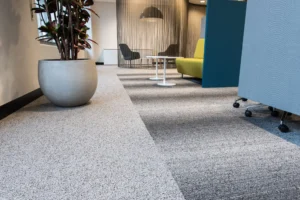
First, the carpet itself. Commercial carpet is usually low, dense loop pile or level loop, often glued directly to the slab with no pad. It’s built to handle rolling chairs, foot traffic, and daily abuse. That’s great for durability. It’s tough on cleaning, though, because soil gets trapped at the base of the loops and the adhesive doesn’t like a lot of water. Over-wetting can cause bubbles, browning, or delamination. That’s why professional carpet cleaners who do commercial work use controlled moisture and high airflow extraction.
Second, the soil is different. Homes deal with pet accidents, juice, and skin oils. Commercial spaces deal with tracked-in grit, rubber from shoes, coffee, copier toner, salt, and ice melt. That grit is sharp. Under thousands of footsteps, it cuts fibers and dulls appearance. Salt and ice melt are alkaline and can damage adhesives if they aren’t neutralized and extracted. Break rooms add food oils that bind to fiber and attract more dirt. So a good commercial carpet cleaner shows up with chemistry for all of that, not just a generic pre-spray.
Third, scheduling matters. Most businesses cannot close off a lobby for 24 hours just to let carpets dry. They need carpet cleaning that can be done after hours and be ready by the next morning. They also need odor elimination that works without leaving behind strong fragrances. Just as important, they need trained, insured, and background-checked technicians who know how to work around alarms, cameras, and other sensitive areas. That is why searching for carpet cleaners near you is only the starting point. What really matters is finding a team that understands commercial spaces.
Finally, documentation matters. Commercial clients often need certificates of insurance, SDS sheets, service reports, and before/after photos. If you manage multiple sites, you need consistent results and clear communication. The best carpet cleaning companies for commercial work act like an extension of your facilities team. They don’t just show up with a wand and hope for the best.
Understanding the cause helps you pick the right fix. Here are the big four we see in offices, retail, and schools.
First, abrasive soil. About 80% of what’s in carpet is dry soil. It’s sand, silica, and grit from outside. It’s heavy, and it sinks. Vacuuming helps, but most commercial vacuums are run too fast to be effective. When that grit stays in the carpet, every footstep and chair roll grinds it against the fibers. Over time, traffic lanes turn gray and look worn even though the carpet isn’t old. That’s why regular Carpet Cleaning is maintenance, not a luxury.
Second, oily film. This comes from parking lots, car mats, cooking vapors, and HVAC systems. It coats fibers and makes dry soil stick. Water alone won’t release it. You need a surfactant and proper extraction. If a cleaner just uses hot water, they’re moving water around, not removing the film. That’s why carpet looks dirty again two weeks later.
Third, spills and spots. Coffee, soda, and food contain sugars and dyes. If they aren’t removed completely, they become sticky spots that attract dirt. Ink and toner need specialty stain removal service. Ice melt and salt need to be neutralized, not just rinsed. Using the wrong product can set a stain permanently or cause browning.
Fourth, moisture problems. Over-wetting from DIY attempts or bad cleaning causes wicking, mildew, and adhesive issues. In glue-down carpet, too much water can create bubbles that don’t go away. In tile-over-slab, it can trigger odors. That’s why low-moisture or controlled-moisture methods are so popular for commercial work. You get a deep clean without the risk.
When you search for carpet cleaning services for your business, you’re really searching for someone who understands these four causes and has a plan for each one. That’s the difference between a quick cosmetic pass and a real solution.
Here’s something facility managers know but don’t always say out loud. Carpet is a giant filter. It traps dust, pollen, dander, paper dust, and fine particulates so they don’t float in the air. That’s good. But filters get full. When they do, they stop helping and start hurting.
The EPA notes that indoor air can be more polluted than outdoor air because everything stays trapped inside. If your carpet is loaded, your HVAC is just recirculating allergens. Staff with allergies or asthma feel it first. Productivity drops. Complaints go up. A thorough commercial Carpet Cleaning resets that filter.
At Safe-Dry®, we use HEPA vacuuming to pull out dry soil before we add any moisture. Then our low-moisture carbonating process lifts and extracts the oily film that holds allergens to the fiber. Because we use 80% less water than traditional methods, your space isn’t humid for hours. That matters for air quality and for preventing dust mite activity. For sensitive environments, we use eco friendly carpet cleaning products with low VOCs and can provide SDS sheets for your records.
Additionally, regular cleaning removes bacteria loads that odors feed on. Break rooms and restroom approaches are common problem areas. Our odor elimination process targets the source, not just the smell. If you’ve ever had employees comment on a “musty” conference room, you know how much perception matters. Clean carpet helps your space feel fresh the minute someone walks in.
Commercial carpet isn’t cheap. Between material, tear-out, floor prep, and install, a mid-size office can run tens of thousands. Replacing it early because it looks worn is a budget hit nobody wants. The good news is that most “wear” is actually soil damage, and it’s preventable.
That abrasive grit we talked about cuts fibers every time someone walks. It also scuffs the surface and dulls color. Regular professional carpet cleaning removes that grit before it does damage. The Carpet and Rug Institute recommends scheduled maintenance with interim and restorative cleaning to maximize carpet life. That’s an external link worth bookmarking if you manage facilities.
Moreover, many commercial carpet warranties require professional cleaning every 12 to 24 months. Skip it and you risk voiding coverage. A certified carpet cleaning company documents each service with dates, areas, and methods. If you ever need to make a warranty claim, you have proof.
Finally, think about replacement disruption. Moving cubicles, desks, and servers to replace carpet is a huge project. Maintenance cleaning is a fraction of the cost and hassle. Affordable carpet cleaning on a schedule keeps you from facing a big capital expense early. That’s real ROI.
You get one chance at a first impression. A stained entry, dark traffic lanes, or a sour smell in the reception area sends the wrong message. Customers notice. So do job candidates, vendors, and your own team. Clean carpet signals that you care about details.
Odor is especially tricky in commercial spaces. It can come from food, mildew after a leak, restroom traffic, or salt residue. Masking it with fragrance makes it worse because you end up with “clean plus musty.” True carpet odor removal means finding the source, treating it, and extracting it. In glue-down carpet, that often means neutralizing salts or using enzymes in break room areas. It’s not complicated if you know what you’re doing, but it does require the right process.
A professional carpet cleaning company that does commercial work will walk your space and point out what guests see first. Entrances, elevator lobbies, paths to conference rooms, and around copiers are hot spots. Cleaning those on a higher frequency keeps the whole building looking sharp without cleaning every square foot every time. That’s smart budget use.
Businesses can’t shut down for a day to let carpet dry. You need floors ready before open. That’s why dry time is a huge factor in commercial work. Over-wetting creates slip hazards, extends downtime, and can cause wicking or browning. A low-moisture or well-extracted method gets you back in business fast.
Liability matters too. If a vendor is not insured and something goes wrong, your business could be left dealing with the consequences. Also if harsh chemicals are used without proper ventilation, complaints can follow. If residue is left behind and someone slips, that creates another serious issue. Working with an insured carpet cleaning company that uses trained technicians, proper equipment, and clear safety protocols helps protect your business. It is smart to ask for a certificate of insurance and confirm that your business is listed correctly. You should also ask about background checks for after-hours access and about the drying plan so you are not opening the next day to damp floors.
At Safe-Dry®, we schedule commercial work overnight or on weekends. We use air movers and your HVAC to accelerate drying. Most spaces are ready in 1 to 4 hours depending on size and airflow. We also post wet floor signs and work in sections so you can keep partial access if needed. That’s how professional carpet cleaners respect your operation.
Commercial work isn’t one-and-done. It’s a relationship. You want the same crew, the same quality, and clear records. A top rated carpet cleaning company will provide service reports, before/after photos, and notes on problem areas. If you manage multiple locations, you want one point of contact and consistent pricing. If you have compliance requirements, you want SDS sheets and training docs.
You also want a company that can solve problems, not just clean carpet. Maybe you had a water leak and need emergency carpet cleaning. Also maybe you are opening a new location and need a fast turnaround. Maybe the waiting room furniture needs upholstery cleaning to match the freshly cleaned carpet. A full-service partner can handle those needs together, which makes the process easier and keeps you from managing multiple vendors.
That’s why “carpet cleaning near you” is just the start. You’re really looking for carpet cleaners near you who act like part of your team. They show up on time, communicate clearly, and leave the place better than they found it.
Let’s make this practical. Here’s the exact process we recommend to facility managers and business owners.
Search for commercial carpet cleaning companies near you and read reviews, but filter for commercial details. Look for mentions of offices, medical, retail, schools, or after-hours service. A company that only talks about houses might not be the right fit. Ask your network too. Property managers and other business owners know who shows up and who doesn’t.
Visit websites and confirm they are an insured carpet cleaning company. Look for IICRC or similar certified carpet cleaning credentials. If you have specialty needs like healthcare or education, ask about compliance and background checks. If you need eco friendly carpet cleaning, ask for product info and SDS sheets.
Call and ask three questions. What method do you use for commercial glue-down carpet? What is your typical dry time? How do you handle salt, coffee, and high-traffic lanes? You want clear, confident answers. “We hot water extract everything and it dries tomorrow” is a red flag for most commercial spaces. “We use low-moisture encapsulation or controlled extraction and you’re dry in 1 to 4 hours” is what you want to hear.
A real pro will want to see the space. During the walk, point out entrances, break rooms, and any problem areas. Ask them to explain what they’d do differently in each zone. Then get a written carpet cleaning estimate with square footage, method, frequency, and price. It should list exactly what’s included: pre-vacuum, pre-spray, agitation, extraction, spotting, and drying. If you want carpet protectant or carpet deodorizing, it should be line-itemed.
Ask for two or three references in similar facilities. Call them. Ask if the crew was on time, if areas were dry by open, and how communication was. Ask to see a sample service report. You want to know what you’ll get after each visit.
Before you sign a year-long contract, do a test. Pick a high-traffic area and have them clean it. Check dry time, appearance, and whether spots wick back. Walk it with your team the next morning. If it passes, scale up. If it doesn’t, keep looking. A confident company will welcome a pilot.
Once you choose a partner, build a schedule. High-traffic zones might be quarterly. Medium areas twice a year. Low-traffic annually. Add interim low-moisture cleaning between restoratives. Put it on the calendar and budget. Review yearly and adjust based on traffic changes or renovations.
Keep this list handy when you talk to vendors. It keeps the conversation focused and helps you compare apples to apples.
Are you insured and can you provide a COI naming us as certificate holder? Are your technicians background-checked and trained? What is your primary method for commercial glue-down carpet and why? What are typical dry times and how do you achieve them? How do you handle salt, coffee, and food oils? Do you provide SDS sheets and use low-VOC products? What is included in your standard service? What are add-ons? How do you price: by square foot, by area, or by time? Do you offer a maintenance plan with interim and restorative cycles? What is your process if a spot wicks back or we’re not satisfied? Can you work after hours or weekends and provide a supervisor on site? Can you provide references in facilities like ours?
If a company answers clearly and in writing, you’re on the right track. If they’re vague, slow, or pushy, move on. You’re hiring a partner, not a transaction.
Your cleaner does the heavy lifting. These habits keep results lasting longer and reduce your carpet cleaning cost over time.
First, matting is king. Use 15 to 20 feet of matting at main entrances. That means a scraper outside, a scraper/wiper in the vestibule, and a wiper inside. Swap or clean mats weekly. Mats are cheaper than carpet and they catch a ton of soil.
Second, vacuum daily in high-traffic zones. Use dual-motor vacuums with good filtration and brush agitation. Train staff to go slow. Fast vacuuming is just cardio. Slow passes remove soil. Replace bags or empty bins when two-thirds full.
Third, address spills immediately. Keep a simple spot kit at reception and in break rooms: white towels, a neutral spotter, and a bone scraper. Blot, don’t scrub. If it doesn’t come up, call your carpet cleaner. Quick action prevents permanent stains and reduces the need for intensive stain removal service.
Fourth, control humidity. Run HVAC to keep indoor humidity between 35% and 50%. It helps carpet dry faster after cleaning and reduces dust mite activity. It also helps with odor elimination.
Fifth, protect high-wear areas. Use chair mats under rolling chairs. Put walk-off mats in front of copiers and coffee stations. These are cheap fixes that prevent expensive wear.
Sixth, schedule interim cleaning. Low-moisture encapsulation between restorative cleanings keeps oil and soil from bonding. It’s fast, affordable, and keeps the space looking sharp for clients and staff.
Seventh, communicate. If traffic patterns change or you add a new entrance, tell your carpet cleaner. They can adjust the plan so you don’t overpay or under-clean.
There isn’t one perfect method for every building. Here’s a plain-English breakdown so you can ask smart questions.
Hot water extraction uses heated water and detergent to flush soil, then powerful vacuum to remove it. Pros: excellent soil removal when done right. Cons: can leave carpet wet if not extracted well, and dry times can be long. Best for restorative cleaning or when carpet is heavily soiled, with good airflow and time to dry.
Encapsulation uses a crystallizing detergent that surrounds soil. As it dries, the soil is encapsulated and then vacuumed away later. Pros: very low moisture, fast dry times, great for maintenance. Cons: not ideal for heavy grease or urine without pre-treatment.
Low-moisture carbonation uses carbonated solution to lift soil, then high-airflow extraction. Pros: minimal water, fast dry times, great for glue-down carpet. Cons: needs proper pre-vacuum and agitation to be effective.
Bonnet or pad cleaning uses a rotary machine with an absorbent pad. Pros: fast appearance improvement. Cons: can drive soil deeper if not pre-vacuumed well, and can leave swirl marks. Best as interim, not as the only method.
Shampoo is old school and rarely used today because it leaves residue. If someone suggests it, ask why.
The best commercial programs combine methods. Use encapsulation or low-moisture for interim maintenance. Use hot water extraction or restorative low-moisture for periodic deep cleaning services. A good vendor will explain the mix and why it fits your building.
Let’s talk money without playing games. Carpet cleaning prices for commercial work depend on square footage, layout, soil level, access, and frequency. A wide-open warehouse with light soil cleans faster per square foot than a chopped-up office with lots of desks. Night work may cost more than day work. Heavy salt or food oil removal adds time.
That said, you should expect clear pricing. A written carpet cleaning estimate should list method, areas, frequency, and price per square foot or per visit. There should be a minimum charge to cover setup. Add-ons like heavy spotting, odor elimination, or protectant should be line-itemed. If you’re on a maintenance plan, your per-visit cost should be lower than one-off emergency carpet cleaning.
Ask about carpet cleaning specials or carpet cleaning deals for bundled services. If you also need upholstery cleaning in waiting rooms or area rug cleaning in lobbies, bundling can save money. Just make sure the scope is clear. A deal that excludes pre-spray and spots isn’t a deal.
We’ve seen the mistakes. Here are the big ones to avoid.
No insurance or refusal to provide a COI. That’s a hard stop. Vague scope and “we’ll take care of it” answers. You need specifics. “We soak it and it dries tomorrow” with no drying plan. That’s a risk to your operation. High-pressure sales for protectant or add-ons. Offer it, don’t force it. No references or no experience in your facility type. Medical, education, and retail all have nuances. If they can’t speak to them, keep looking. Prices that are wildly low with no explanation. Something is missing.
Also watch for poor communication. If they’re slow to reply during bidding, it won’t improve after you sign. You want a partner who respects your time and your building.
While residential homes are our main focus, we also work with select commercial spaces when our process is the right fit. This can include professional offices, medical suites, churches, daycares, and small retail spaces. In every setting, we bring the same thoughtful, family-first care that we bring into the homes we serve.
To help your space look clean and consistent, we can combine carpet cleaning services with upholstery cleaning and area rug cleaning. We also handle pet stain and odor removal in pet-friendly offices and doggy daycares. For businesses that want ongoing support, we offer maintenance plans with both interim and restorative cleaning cycles to keep carpets looking their best throughout the year. If your facility needs high-volume hot water extraction or another specialty service we do not provide, we will be upfront about it and refer you to a trusted partner when possible. That same honest approach has helped families trust Safe-Dry®, and we bring it with us into commercial work as well.
Here’s how to set the relationship up for success.
Meet the account manager and lead tech. Walk the site together. Confirm contacts, access, and emergency numbers. Review the scope, schedule, and service report format.
Do a deep clean to reset the carpet. This may take longer than maintenance visits. Plan for it. Take before photos so you can see the difference.
Book the next interim and restorative dates. Put them on your calendar and your cleaner’s calendar. Consistency is key.
Walk the space with your cleaner. Look at traffic lanes, entrances, and break rooms. Adjust frequencies if needed. If something isn’t working, speak up. A good partner will tweak the plan.
Save the service reports and photos. Share wins with your team. Clean space boosts morale. When people see you investing in the building, they take better care of it.
It depends on traffic, but a common plan is quarterly for entrances and high-traffic paths, twice a year for medium areas, and annually for low-traffic offices. Add interim low-moisture cleaning between restoratives. If you see soil or get complaints, increase frequency. Regular Carpet Cleaning costs less than restorative cleaning and replacement.
Not if it’s planned well. We schedule after hours, use fast-dry methods, and work in sections. Most spaces are ready in 1 to 4 hours. We also use low-odor products and proper ventilation. Communication and a clear scope prevent surprises.
Yes. We use detail tools to edge along systems furniture and get under open areas. If you want full moving of contents, that’s possible but adds time and cost. Most commercial jobs are cleaned in place with detail edging, which is efficient and effective.
We use a neutralizing rinse to dissolve and extract salt residue, then clean normally. If left alone, salt can wick back and damage fibers and adhesives. Increase mat service and vacuuming in winter, and schedule a post-season restorative cleaning.
Yes. We use eco friendly carpet cleaning solutions and can select fragrance-free products for sensitive environments. We provide SDS sheets and can meet LEED or other facility requirements. Just tell us your needs when you request a quote.
First we find the source. It could be food, mildew from past over-wetting, or restroom traffic. We treat the source with the right chemistry, extract thoroughly, and use air movers to dry fast. Masking odors without removing the source doesn’t work and we don’t do it.
Yes. We provide service reports, before/after photos, COIs, and SDS sheets. If you’re on a maintenance plan, we track dates, areas, and observations so you can show compliance and plan budgets.
Call us. We offer emergency carpet cleaning and can help stabilize the situation. For small spills, we’ll walk you through blotting and containment by phone. For larger water issues, we extract and set drying equipment to prevent damage. Fast response is key.
Yes. If an area doesn’t meet expectations, we’ll return to address it within our service window. We want long-term partners, not one-time jobs. That’s part of being a best carpet cleaning provider, not just a vendor.
Reach out for a free carpet cleaning quote. Share your square footage, hours, problem areas, and goals. We’ll survey the site, build a scope and schedule, and give you a clear price. No pressure, just a plan.
You have a business to run. You don’t have time for soggy floors, recurring spots, or vendors who don’t show. At Safe-Dry®, we bring the same care we give families into the commercial spaces where they work, learn, and shop. Our low-moisture Carpet Cleaning process means less disruption, faster dry times, and results you can see. We’re certified, insured, and experienced with the details that matter in offices, medical suites, schools, and retail.
If you’ve been searching for commercial carpet cleaning companies near you and want a partner who communicates clearly and stands behind the work, let’s talk. Request your free carpet cleaning quote today. Tell us about your traffic, your trouble spots, and your schedule. We’ll build a maintenance plan that keeps your space looking its best without surprises. Whether you need a one-time deep cleaning services visit or a year-round program, we’re here to help.
Connect with Safe-Dry® now to book a walk-through, ask about carpet cleaning specials, or get advice on your specific facility. Clean carpet is more than appearance. It’s health, safety, and pride in your space. Let’s get yours there and keep it there.