100% Satisfaction or It's FREE!
100% Satisfaction or It's FREE!
Few household problems are as frustrating as walking into a room, noticing a pet odor, and having no idea where it is coming from.
Pet odors can be difficult to track because the place where you smell them most strongly is not always where the original accident happened. Air movement can carry odor across a room. Urine may spread underneath carpet fibers. A small accident can reach carpet backing or padding even when the visible spot on top seems minor.
Furniture, area rugs, baseboards, curtains, pet beds, and even nearby hard flooring can also hold odor.
This is why effective pet odor & stain removal begins with finding the source.
Covering the smell with carpet deodorizing powder, scented spray, or an air freshener may temporarily make the room smell different. However, fragrance alone does not remove contamination hidden below the surface.
At Safe-Dry®, we approach pet odors by looking for the affected area first and then determining what type of cleaning is appropriate. Pet accidents are not always limited to a single visible mark. Professional detection and targeted treatment may be needed when urine has reached below the carpet surface.
Pet owners should not feel discouraged when an odor is difficult to locate. Hidden pet smells are common, especially in homes with multiple rooms, older accidents, pets that return to favorite spots, or flooring that has absorbed moisture below the surface.
The good news is that you can investigate the problem systematically.
This guide will walk through how to narrow down the source, what surfaces to inspect, what DIY steps are safe to try, and when professional pet odor removal makes more sense than another bottle of deodorizer.
A fresh accident is usually obvious.
An older one can be completely different.
Once urine dries, the visible moisture disappears. Depending on the carpet color, the spot may barely be noticeable. Furniture can cover part of the affected area. A rug may have been moved after the accident happened. Repeated vacuuming can remove surface debris without addressing urine below.
Urine may also travel farther than expected.
Carpet is made of layers. The visible fibers are only the top portion. Underneath them may be backing, padding, and the subfloor.
If enough liquid reaches those layers, surface cleaning may improve the appearance without fully removing the source of the smell.
Safe-Dry® notes that pet accidents can penetrate carpet fibers and reach backing or padding. When contamination remains beneath the surface, fragrance or light surface treatment may temporarily hide the problem while the odor eventually returns.
Pets may also revisit the same area.
Dogs and cats have a much stronger sense of smell than people. Residual scent from an old accident can encourage a pet to return to a previously soiled location. Both the American Kennel Club and Humane Society guidance emphasize thoroughly cleaning previously soiled areas because lingering scent can contribute to repeat accidents.
This creates a cycle.
A homeowner cleans what looks like one small stain. The pet smells what remains below. Another accident occurs nearby. Eventually, the odor seems larger than any one visible spot.
Finding the full affected area is therefore one of the most important parts of successful pet stain and odor removal.
Before reaching for cleaning products, think about where your pet spends time.
Pets are creatures of habit.
A dog may return to the same corner near a doorway. A cat may favor an area behind furniture. An older pet might have accidents close to where it sleeps because reaching the usual bathroom location has become more difficult.
Look at your home's layout from your pet's perspective.
Consider:
Where does your pet sleep?
Where do they wait when you leave the house?
Which room do they spend the most time in?
Are there corners hidden behind furniture?
Is there a favorite area rug?
Does the pet stay near a particular door?
Are there rooms that remain closed part of the day?
Has furniture recently been rearranged?
Was a pet accident cleaned quickly but never professionally treated?
These questions can narrow down the search before you begin moving furniture or treating random sections of carpet.
When people cannot locate a smell, the natural reaction is often to deodorize everything.
This can make the investigation harder.
Strong fragrances may temporarily overwhelm your nose and make it more difficult to determine where the original odor is strongest.
Instead, begin with the room where you first notice the smell.
Leave the room for several minutes, then return.
Pay attention to where the odor becomes noticeable first.
Walk slowly around the perimeter.
Then move through the center of the room.
Check near furniture, corners, doorways, pet beds, and rugs.
Avoid placing your face directly against carpet or contaminated surfaces.
The goal is simply to identify which area seems stronger.
If one side of the room consistently smells worse, concentrate your inspection there.
A visible stain can be helpful because it gives you a starting point.
However, do not assume its borders show the entire affected area.
Liquid can spread sideways as it moves downward.
This means a stain that measures only a few inches on the surface may have affected a larger section underneath.
Look at the carpet from several angles.
Natural light or bright room lighting can sometimes reveal differences in texture or color.
Watch for:
Slight yellowing
Darker fibers
Stiff carpet
Areas with a different texture
Previously cleaned rings
Discoloration around furniture
Repeated marks in a similar location
Carpet stain removal is only one part of pet accident cleaning. If the odor remains after the visible mark improves, contamination may still be present below.
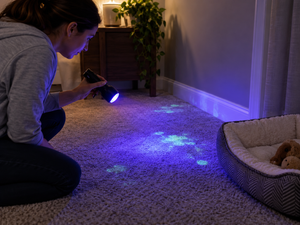
One useful tool for finding older urine spots is a UV or black light designed to detect pet stains.
Both the American Kennel Club and PetMD recommend UV or black-light inspection as one way to locate dried urine that may not be obvious during normal daylight.
For best visibility, darken the room.
Move slowly across the carpet rather than waving the light quickly.
Check edges, corners, furniture legs, baseboards, rugs, and areas near doors.
Mark suspicious areas temporarily with removable tape or another method that will not damage the flooring.
Keep in mind that a UV light is a detection aid, not a perfect diagnosis.
Other substances can fluoresce too. Cleaning products, spills, fibers, and household residues may also appear under certain lights.
Use the results together with smell, visible signs, and knowledge of where your pet spends time.
Professional carpet cleaners may use specialized detection methods when investigating pet odor problems.
Padding is one of the most common reasons pet odor returns.
If urine reaches the padding, cleaning only the carpet fibers may not completely solve the problem.
The top of the carpet can look clean while odor remains below.
You might notice this when:
The smell returns on humid days.
The room smells worse after being closed.
An area smells clean immediately after treatment but the odor comes back later.
The smell becomes stronger after the carpet gets slightly damp.
The same spot has been treated several times.
Professional pet urine removal may involve deeper treatment when contamination has reached beneath the visible fibers. Safe-Dry® explains that subsurface extraction or more focused treatment can be appropriate when pet urine has reached carpet padding.
Repeatedly soaking the surface with more cleaner is not always the answer.
More moisture can spread contamination farther or leave additional liquid in the padding.
Area rugs can hide pet accidents surprisingly well.
A patterned rug may conceal discoloration completely.
The top can also be cleaned while urine remains in the backing or transfers to the floor underneath.
If the rug can be moved safely, inspect both sides.
Look underneath for:
Dark marks
Yellow or brown discoloration
Odor concentrated on the backing
Changes in texture
Staining on the floor below
Pet hair or debris collected near edges
A rug that smells clean on top may still have contamination underneath.
Professional area rug cleaning can help when the odor has moved deeper into the rug structure. Safe-Dry® uses extraction and targeted spot or odor treatments when appropriate for affected rugs.
For delicate, antique, wool, silk, or Oriental rugs, avoid experimenting with aggressive pet stain products.
Specialty fibers can react differently to moisture and cleaning chemistry.
Pets often choose quiet or hidden spaces when they are nervous, marking territory, or trying to avoid being seen.
Check beneath sofas, chairs, beds, side tables, desks, and other furniture.
Furniture legs can also hide small stains.
If a pet repeatedly visits the same corner behind a chair or sofa, that area deserves a closer look.
Moving furniture can reveal stains that have been hidden for weeks or months.
Use appropriate lifting techniques and avoid dragging heavy furniture across carpet.
Carpet is not the only soft surface that can hold pet odor.
Sofas, chairs, ottomans, mattresses, and upholstered benches can absorb pet accidents.
Cats and dogs may also leave body oils, dander, saliva, and other odors on furniture where they spend a lot of time.
Remove cushions when possible and inspect underneath them.
Smell individual cushions from a reasonable distance.
Check seams, edges, sides, and the area beneath the furniture.
If odor is concentrated in the couch rather than the floor, upholstery cleaning may be more appropriate than additional carpet cleaning.
Professional upholstery cleaning can help address contamination that routine surface wiping cannot reach.
Sometimes the mystery odor is not the carpet at all.
Pet bedding can develop a strong smell gradually.
Because homeowners are exposed to it every day, they may become accustomed to the odor until it becomes more noticeable throughout the room.
Wash washable bedding according to its care instructions.
Inspect foam inserts separately.
Some foam pet beds can absorb urine deeply and may not respond to simple surface washing.
Blankets, crate pads, fabric toys, and pet carriers can also contribute.
Clean these items before assuming the flooring is responsible for the entire odor problem.
Male pets that mark vertically can create odor in places homeowners do not immediately associate with urine.
Check:
Hard vertical surfaces near common marking locations
Urine on painted walls or wood may require a different cleaning approach than carpet.
Never apply carpet products to painted, sealed, or wood surfaces unless the product specifically allows it.
Pet accidents do not always stay on soft surfaces.
Urine can collect along seams, between floorboards, under trim, or near the edges of rugs.
Hardwood requires particular care because repeated moisture can affect the finish or penetrate wood.
If discoloration, warping, or persistent odor is present, avoid repeatedly soaking the floor.
Prompt cleanup is important when accidents occur on wood and other hard surfaces. The AKC recommends absorbing fresh urine quickly and using cleaners appropriate for the flooring material.
If urine has penetrated an unfinished or damaged wood surface, professional flooring advice may be necessary.
A guest bedroom, dining room, basement room, or home office may contain the hidden source.
Pets sometimes have accidents in quiet spaces because no one notices immediately.
If the smell seems to move around the home, open doors and inspect less frequently used rooms.
Pay special attention to carpet behind doors, closets, corners, and areas blocked by storage.
Homeowners often report that a pet smell appears to return during humid weather.
Moisture in the air can make previously contaminated materials release odor more noticeably.
This does not necessarily mean the pet had another accident.
The original source may never have been fully removed.
Humidity can therefore act as a clue.
If one particular room smells worse during damp weather, inspect carpet padding, rugs, porous flooring, and upholstered surfaces carefully.
A recurring smell usually deserves source-focused pet odor removal rather than another layer of fragrance.
If you know there is a smell but still cannot find it, use a structured search.
Take out trash.
Wash pet bowls.
Clean litter boxes.
Wash pet bedding.
Remove heavily scented air fresheners.
Open the room briefly for ventilation, then close it again before your odor search.
This helps eliminate distractions.
Begin where the odor is strongest.
Do not try to inspect the entire home at once.
Work room by room.
Inspect where your pet sleeps, eats, waits, plays, and spends time when alone.
Look around doors and corners first.
Use good lighting.
Look for color changes, rings, texture differences, or spots that appear unusually clean compared with surrounding carpet.
A previously treated area can sometimes stand out as much as an untreated stain.
Lift movable rugs.
Inspect their backing and the floor underneath.
Move lightweight furniture where practical.
Darken the room and scan slowly.
Mark suspicious areas for closer inspection.
Avoid assuming every glowing spot is urine.
Use smell and visual evidence together.
Check baseboards, table legs, walls, furniture sides, and door frames.
This is especially important when territorial marking may be involved.
Inspect couches, chairs, removable cushions, and pet-favorite furniture.
The strongest odor may not be coming from the floor.
If several suspicious areas are found, note their locations.
This can be especially helpful before professional carpet cleaning.
Instead of telling the technician, “The whole room smells,” you can explain where accidents are most likely to have occurred.
Repeatedly applying different cleaners can complicate the problem.
Too much liquid can push contamination deeper.
Different products can leave residue or react unpredictably with one another.
If several DIY attempts have failed, professional pet odor & stain removal is usually a better next step than continuing to experiment.
Safe-Dry® specifically notes that repeated deodorizing without removing the source may only mask odors temporarily.
Fresh accidents offer the best opportunity for quick cleanup.
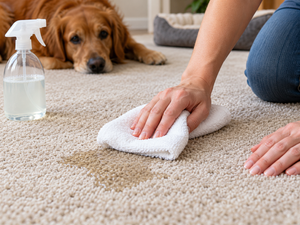
Start by absorbing as much liquid as possible.
Use clean white towels or paper towels.
Blot rather than scrub.
Apply gentle pressure and replace saturated towels as needed.
Avoid grinding the liquid into the carpet.
Once the excess has been absorbed, follow the carpet manufacturer's cleaning recommendations and use a pet-safe product appropriate for the material.
The AKC recommends prompt action because removing moisture quickly can reduce the likelihood of a lingering stain and odor.
Avoid flooding the area.
A small accident can become a deeper padding problem if excessive water or cleaning product is poured over it.
Scrubbing feels productive because it creates visible action.
Unfortunately, it can spread the affected area.
Aggressive rubbing may also disturb carpet fibers.
Blotting removes moisture upward.
Scrubbing can push it outward and deeper.
Use patience instead of force.
If the spot remains after careful home treatment, professional carpet stain removal is usually safer than repeated aggressive cleaning.
Heat is not always a good choice for pet accidents.
Humane Society guidance specifically cautions against using steam cleaners on urine odors in carpet or upholstery because heat may set protein-based staining and odor into fibers.
Homeowners looking for pet urine carpet cleaning should make sure the method is appropriate for the contamination involved.
Safe-Dry® uses targeted pet treatments alongside its low-moisture professional carpet cleaning process when needed.
Do not combine cleaning products in an attempt to create a stronger pet odor eliminator.
Mixing chemicals can be dangerous.
It may also damage carpet fibers, alter carpet color, leave residue, or make later professional treatment more difficult.
Use one appropriate product according to its instructions.
If it does not work, stop before applying several more.
Tell your professional carpet cleaner what products have already been used.
This information can help when evaluating the affected area.
Cat urine odors can be particularly persistent.
Cats may urinate in hidden areas, including closets, corners, rugs, and behind furniture.
A small amount can also produce a noticeable odor.
Repeated accidents can create contamination that extends beyond the visible spot.
Cat urine removal therefore begins with locating all affected areas rather than treating the first stain found.
A UV inspection can be especially useful when several hidden spots are suspected.
If contamination has reached carpet backing or padding, deeper professional treatment may be necessary.
Dogs may have accidents near exterior doors, especially when they are waiting to go outside.
Older dogs, puppies, and anxious pets may also have accidents in hallways or around frequently used rooms.
Inspect doorway carpet carefully.
Check behind curtains near patio doors.
Look around furniture located close to exits.
Dog urine removal should include the entire affected area, not just the visible center of the spot.
Sometimes there is no single source.
Homes with multiple pets or a long history of accidents may contain several affected areas.
Treating one spot may improve the room but not eliminate the overall odor.
This situation is where professional detection becomes especially valuable.
A trained carpet cleaner can inspect the room and determine whether contamination appears limited to individual spots or covers a broader section.
Safe-Dry® may recommend targeted pet stain and odor removal, carpet odor removal, carpet cleaning, or deeper treatment depending on what is found.
Carpet deodorizing and odor elimination are not always the same thing.
A deodorizer may add or modify fragrance.
True odor treatment focuses on contamination causing the smell.
This distinction matters when pet urine has reached below the surface.
Safe-Dry® describes its pet odor & stain removal service as a targeted treatment intended to address the source rather than simply cover the smell.
You can learn more about Safe-Dry®'s available pet treatments through Safe-Dry® Carpet Cleaning and pet odor & stain removal services.
Homeowners who also need a broader floor refresh can review Safe-Dry® professional carpet cleaning services.
Professional help may be appropriate when:
The odor keeps returning after DIY treatment.
There are several accident locations.
Urine reached carpet padding.
The affected area is larger than it initially appeared.
You cannot locate the source.
The carpet has repeated pet stains.
Store-bought products have already been used several times.
There is contamination on a large rug or specialty textile.
Upholstery smells strongly of urine.
A room smells worse during humid weather.
The home needs broader carpet odor removal.
Professional carpet cleaners have equipment and experience designed for problems that extend beyond surface maintenance.
The best carpet cleaning solution for a pet issue is not necessarily the strongest chemical or the most heavily scented product. It is the treatment that matches the location and depth of the contamination.
Pet accidents on rugs require care because fibers, backing, dyes, and construction vary.
Standard carpet-cleaning advice should not automatically be applied to every rug.
Wool, handmade rugs, and delicate textiles can respond differently to moisture and cleaning products.
If a pet accident occurred on a valuable rug, avoid soaking it with household cleaner.
Professional rug cleaning or oriental rug cleaning can provide a more controlled approach.
Safe-Dry® offers area rug cleaning with targeted odor support when deeper cleaning is appropriate.
Yes.
Furniture cushions can absorb liquid deeper than the visible fabric.
A small surface mark may reach interior foam.
If the couch smells worse when someone sits on it, pressure may be releasing odor from deeper material.
DIY surface cleaning may not reach the full source.
Professional upholstery cleaning can be useful when contamination involves cushions, fabric-covered chairs, sofas, or other porous furnishings.
Repeated indoor accidents can sometimes have behavioral or health-related causes.
Cleaning removes contamination, but it does not address why accidents keep happening.
If a previously house-trained pet suddenly begins urinating indoors, consider speaking with a veterinarian.
Humane Society guidance recommends ruling out medical causes when inappropriate elimination begins or continues unexpectedly.
Once health concerns have been addressed, training and environmental adjustments may help prevent repeat accidents.
Professional cleaning and pet care work together here.
Removing residual odor makes the location less likely to continue signaling itself as an accident zone.
Urine may have reached the carpet backing or padding.
Surface cleaning can improve the visible area without removing deeper contamination.
Odor may therefore return after the carpet dries or when indoor humidity rises.
No.
UV lights are useful detection tools, but other household materials can fluoresce.
Use a black light together with smell, visual inspection, and knowledge of your pet's habits.
Higher indoor humidity can make odors from previously contaminated porous materials more noticeable.
A recurring smell during humid conditions may indicate contamination that was never completely removed.
Some homeowners use baking soda for light odor absorption, but it does not necessarily remove urine contamination below carpet fibers.
Heavy powder use can also leave residue in dense carpet.
If the odor is coming from padding or backing, surface powder will not solve the deeper problem.
Professional carpet cleaning combined with targeted pet treatment can significantly improve pet odor problems.
Results depend on the amount of contamination, how long it has been present, the materials affected, and whether urine reached the padding or subfloor.
Deodorizing may change how a carpet smells.
Pet odor removal focuses on contamination producing the odor.
When urine is involved, treating the source is generally more important than adding fragrance.
Small fresh accidents may respond to prompt home care.
Older, repeated, or deep contamination may require professional cat urine removal, especially when urine has reached padding or multiple locations are involved.
Clean the affected area thoroughly and work on the reason for the repeated accidents.
Lingering scent can encourage pets to return to previously soiled locations.
If the behavior is new or unusual, consult your veterinarian.
Yes.
Enough liquid can move through carpet and padding to reach material underneath.
Severe or repeated contamination may therefore require a more extensive solution than surface carpet cleaning.
No.
Many pet odor problems can be treated without replacing the carpet.
However, very severe or long-term contamination may damage padding, backing, subflooring, or other materials.
A professional inspection can help determine the appropriate approach.
As soon as possible.
Absorbing fresh urine before it spreads can reduce staining and odor problems.
Blot rather than scrub, and avoid oversaturating the carpet.
No.
Repeatedly layering products can add residue and moisture without solving the source.
If one careful treatment does not work, professional pet accident cleaning may be the better next step.
Yes.
Rug fibers and backing can absorb contamination separately from the flooring underneath.
Inspect both sides of the rug and the floor below.
Consider professional service when the smell returns, multiple areas are involved, urine reached padding, DIY products are not working, or you cannot locate the source.
Pet odors become much easier to address once you stop chasing the smell and start looking for the source.
Begin with your pet's favorite areas.
Inspect carpet carefully.
Check underneath rugs.
Look behind furniture.
Examine baseboards and vertical surfaces.
Do not forget couches, chairs, pet beds, and other soft materials.
A UV light can help reveal older urine spots, while repeated odors after surface cleaning may suggest contamination has moved deeper into carpet backing or padding.
Most importantly, resist the urge to keep covering the problem with fragrance.
A room that smells temporarily perfumed is not necessarily a room where the pet contamination has been removed.
Pet odor & stain removal works best when the affected area is identified and treated appropriately.
DIY care can be useful for fresh, small accidents. Blotting quickly and using products appropriate for your carpet can prevent many everyday problems from becoming larger ones.
Older, repeated, hidden, or deep pet accidents are different.
When the odor keeps returning, professional carpet cleaning and targeted pet treatment can help address areas that normal household cleaning cannot easily reach.
Safe-Dry® focuses on identifying problem areas and choosing a cleaning approach based on what is actually happening in the home. Depending on the situation, service may include carpet stain removal, pet urine removal, odor treatment, professional carpet cleaning, rug cleaning, or upholstery cleaning.
The goal is not to cover a pet smell with something stronger.
The goal is to help your home feel clean and comfortable again.
If you have searched the room, cleaned the obvious spots, and still cannot figure out where the odor is coming from, you do not have to keep experimenting with sprays and powders.
Connect with Safe-Dry® to schedule pet odor & stain removal or request a carpet cleaning estimate. Our team can help inspect the affected areas, explain the recommended treatment, and create a practical plan for a cleaner, fresher home that still feels welcoming to every member of the family, including the four-legged ones.